Choosing between WordPress and custom web development can feel overwhelming — especially if you’re not from a technical background.
Both options can build powerful, professional websites. Both can generate leads and grow your business.
But the right choice depends on:
Your business goals
Budget
Timeline
Technical requirements
Long-term scalability
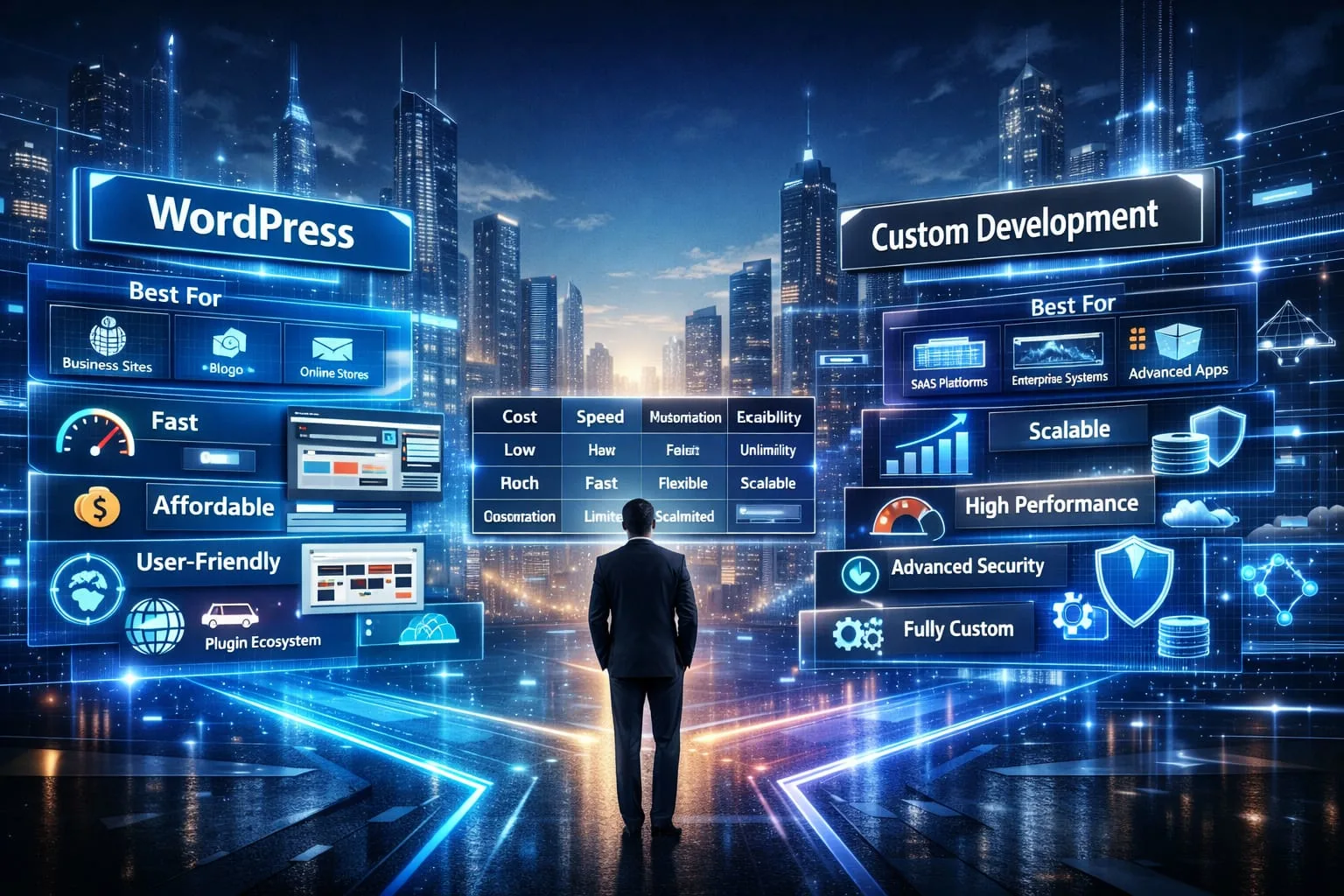
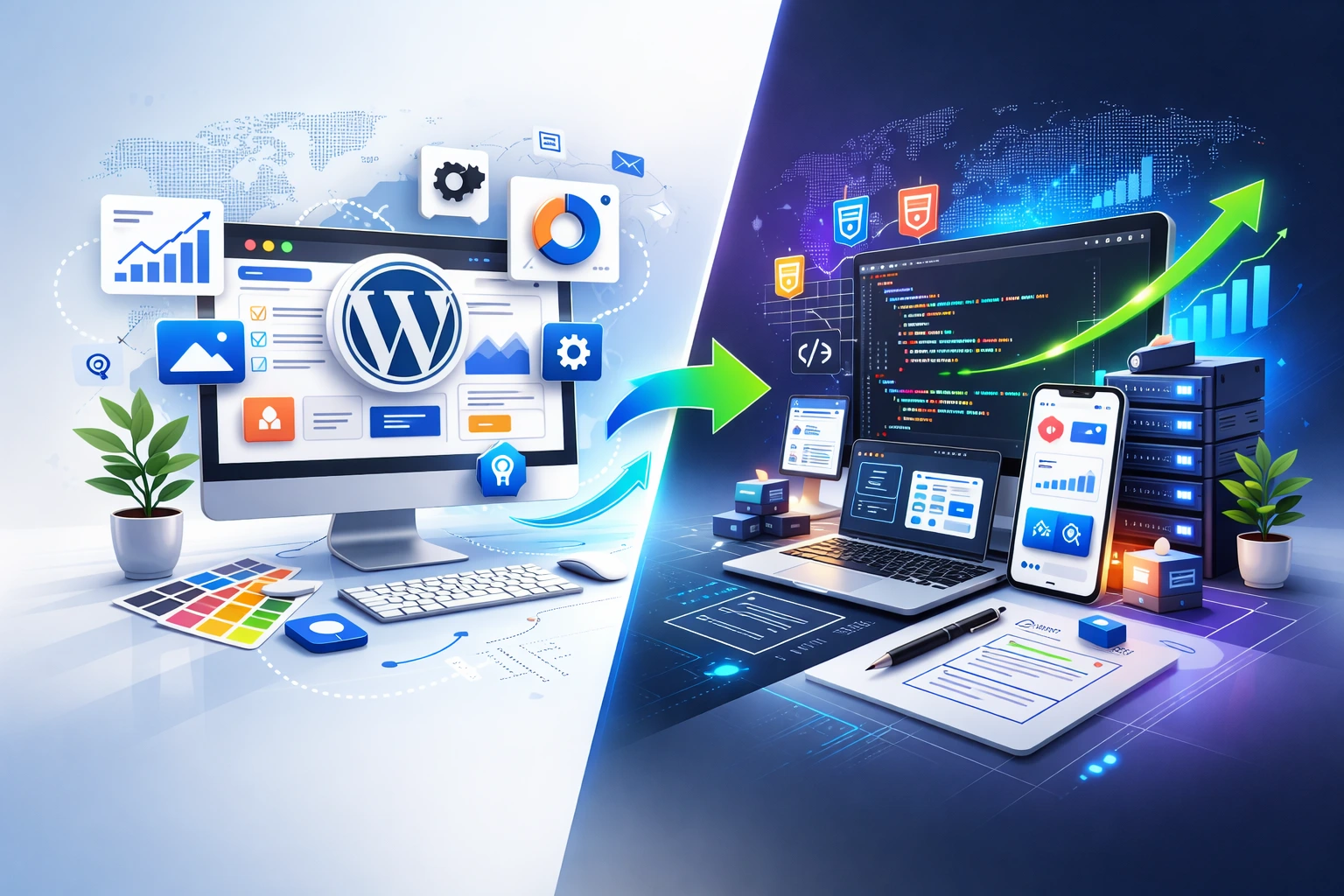
WordPress offers flexibility, affordability, and ease of management. Custom development offers complete control, tailored functionality, and unlimited scalability.
Let’s break it down in detail so you can make the right decision confidently.
What Is WordPress?
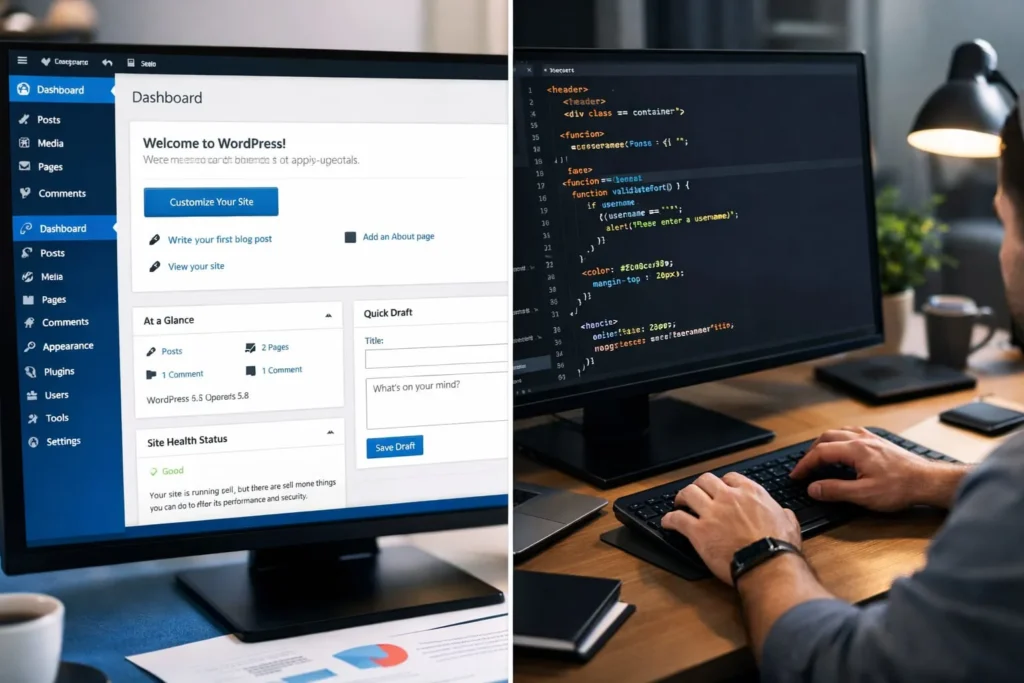
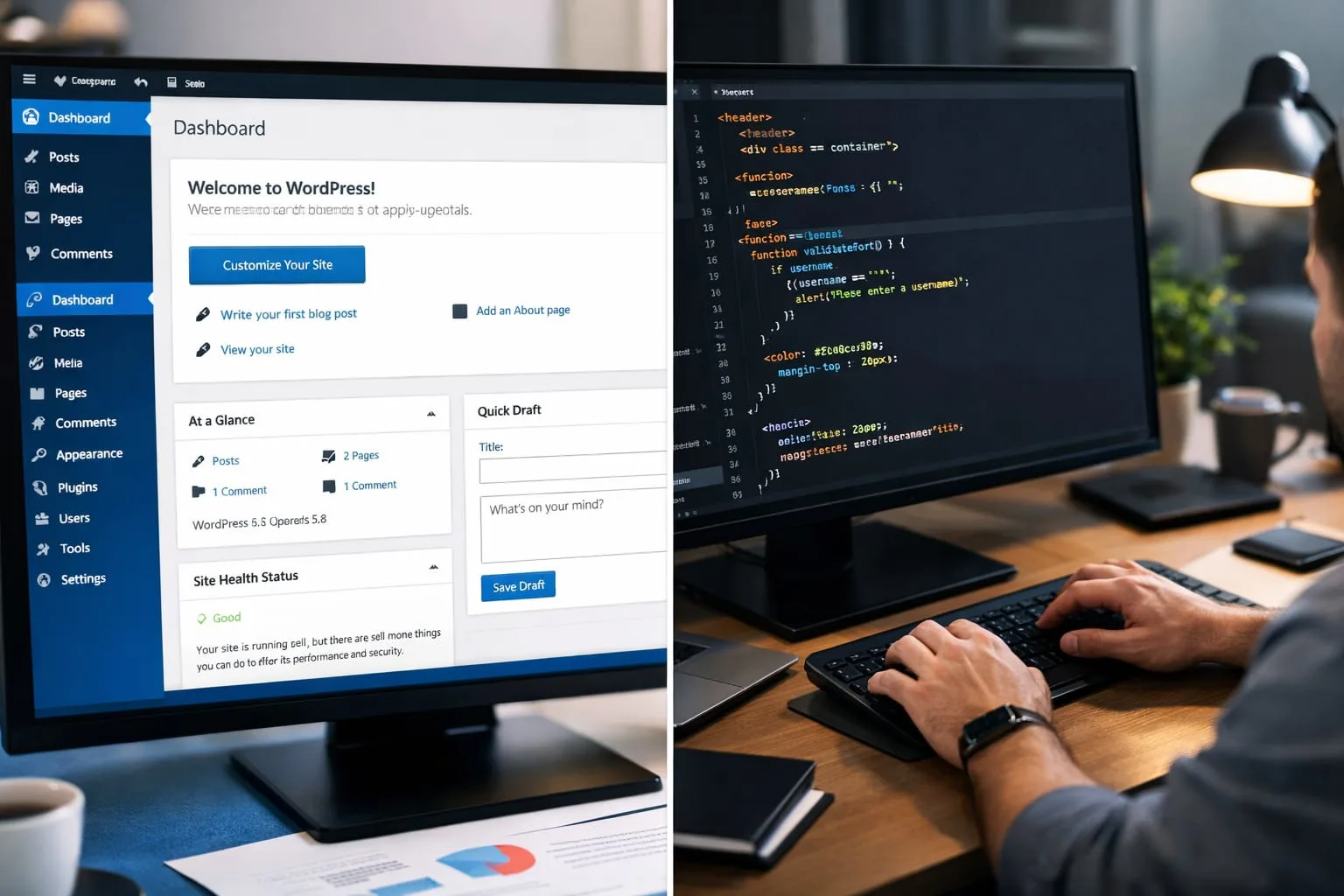
WordPress is a content management system that lets you build and manage websites without writing code. It powers over 40% of websites worldwide, which shows how trusted and widely used it is. Its popularity comes from being easy to use, affordable, and flexible. With page builders like Elementor, even non-technical users can design professional websites visually. WordPress works well for business websites, portfolios, blogs, online stores using WooCommerce, landing pages, and membership sites, making it ideal for small to medium-sized businesses.
What Is Custom Web Development?
Custom web development means building a website from scratch using programming languages such as HTML, CSS, JavaScript, and modern frameworks. Instead of relying on themes or plugins, everything is created specifically for your business needs. This approach gives full control over design, performance, and functionality. Custom development is commonly used for SaaS products, large platforms, complex booking systems, dashboards, and web applications. While it offers maximum flexibility and scalability, it also requires more time, technical expertise, and a higher budget.
Cost Comparison
Cost is often the biggest deciding factor. WordPress is generally more budget-friendly, as expenses usually include hosting, a domain, optional premium themes or plugins, and development if you hire help. This makes it possible to launch a professional website at a reasonable cost. Custom development, on the other hand, involves full design and development from the ground up, backend architecture, testing, and ongoing support. This results in a much higher investment and is better suited for complex or large-scale projects.
Performance & Speed
Website performance depends more on how the site is built than the platform itself. WordPress can be very fast when optimized properly using good hosting, caching, and lightweight themes, but too many plugins or poor setup can slow it down. Custom websites often deliver better raw performance because the code is clean and purpose-built. However, the final speed still depends on the developer’s expertise. With proper optimization, both options can achieve excellent performance.
Scalability
Scalability refers to how well your website can grow with your business. WordPress is great for content-driven sites, service businesses, and online stores, but very complex systems may require heavy customization. Custom development is designed for long-term growth and works best for startups, platforms with large user bases, and businesses needing advanced integrations. It offers virtually unlimited scalability.
Maintenance & Management
WordPress maintenance includes updating plugins and themes, managing security, and taking regular backups. The advantage is that it’s easy to manage, even for non-technical users. Custom development requires ongoing developer involvement for updates, monitoring, and security, which increases maintenance costs. While custom systems offer more control, WordPress is simpler for everyday management.
SEO & Marketing Flexibility
WordPress is highly SEO-friendly and supports content marketing, blogging, and local SEO with ease. Many SEO tasks can be handled through plugins and built-in tools. Custom websites can also rank well, but SEO features must be implemented manually and require experienced developers. In both cases, success depends more on execution than the platform itself.
When to Choose WordPress
WordPress is the right choice if you’re a small or medium business, need a website quickly, want affordable development, and plan to focus on SEO or content marketing. It’s ideal for consultants, agencies, service providers, local businesses, and personal brands.
When to Choose Custom Development
Custom development is best if you’re building a SaaS product, need advanced backend systems, expect rapid growth, or require features that plugins can’t handle. It’s well-suited for tech startups, enterprise platforms, marketplaces, and complex web applications.
When comparing WordPress and custom web development, the differences come down to business needs rather than which option is “better.” WordPress is generally more affordable, easier to maintain, and fast when properly optimized, making it a strong choice for small to medium businesses and service-based websites. Custom development usually costs more and requires technical maintenance, but it delivers cleaner code, higher scalability, and unlimited flexibility for complex platforms and advanced systems.
Final Thoughts
There is no one-size-fits-all solution in web development. The right choice depends on your goals, budget, and long-term vision. WordPress works perfectly for businesses that want a powerful, flexible, and cost-effective website they can manage easily. Custom development is best for companies building complex, large-scale platforms that require full control and advanced functionality. Aligning your technical choice with your business strategy is what ultimately leads to long-term success.
About the Author
This article was written by Harikrishnan J S, a Kerala-based Digital Marketing Expert specializing in SEO, AI-driven marketing, and conversion-focused websites & content strategy.